Choosing the right database is one of the most important decisions when designing an application. Two major categories dominate modern systems: SQL databases and NoSQL databases. Each serves different needs depending on the structure of your data, scalability requirements, and the type of application you are building.
This article explains when to use SQL vs NoSQL, along with practical examples.
What is SQL?
SQL (Structured Query Language) databases are relational databases that store data in tables with predefined schemas. Each table has rows and columns, and relationships between tables are clearly defined.
Key Characteristics of SQL Databases
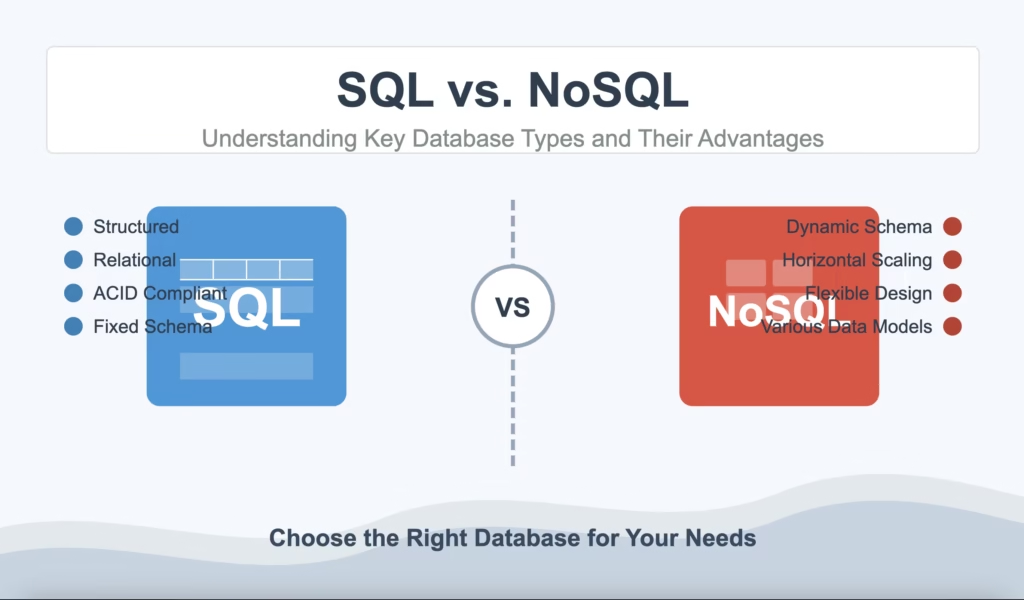
- Structured schema (fixed format)
- Strong data consistency
- Supports complex queries and joins
- Transactions are reliable (ACID properties)
When to Use SQL
1. Applications with Structured Data
If your data fits neatly into tables and relationships, SQL works best.
Example:
- Customer records
- Orders and payments
- Inventory systems
2. Systems That Require High Data Accuracy
When incorrect or missing data is unacceptable, SQL is the better choice.
Examples:
- Banking systems
- Financial applications
- Accounting software
3. Complex Queries and Reporting
SQL is ideal when your application requires:
- Advanced filtering
- Data analysis
- Reporting dashboards
Example:
- Business intelligence tools
- Analytics platforms
4. Stable and Predictable Data Structure
If your data model doesn’t change frequently, SQL databases are easier to maintain and optimize.
Example:
- Enterprise management systems
- Government databases
- HR systems
What is NoSQL?
NoSQL databases are designed to store unstructured or semi-structured data. Instead of tables, they may use documents, key-value pairs, graphs, or wide-column formats.
They are often used in modern web-scale applications where flexibility and scalability are essential.
Key Characteristics of NoSQL Databases
- Flexible schema
- Horizontally scalable
- Handles large volumes of data
- Optimized for speed and distributed systems
When to Use NoSQL
1. Rapidly Changing Data Structures
If your application evolves quickly and the data format changes often, NoSQL is more flexible.
Example:
- Startup products under development
- Apps with frequent feature updates
2. Big Data and High Traffic Applications
NoSQL databases handle massive amounts of data across many servers.
Example:
- Social media platforms
- Large-scale web applications
- Real-time analytics
3. Real-Time Applications
Applications that require fast reads and writes benefit from NoSQL.
Example:
- Chat applications
- Live streaming platforms
- Online gaming systems
4. Unstructured or Semi-Structured Data
If your data includes JSON-like structures, logs, or varied content types, NoSQL is a better fit.
Example:
- Content management systems
- User-generated content platforms
- IoT data storage
SQL vs NoSQL: Quick Comparison
| Feature | SQL | NoSQL |
|---|---|---|
| Data Structure | Tables (rows & columns) | Flexible formats (documents, key-value, etc.) |
| Schema | Fixed | Dynamic |
| Scalability | Vertical scaling | Horizontal scaling |
| Consistency | Strong consistency | Often eventual consistency |
| Best For | Structured data and transactions | Large-scale, flexible applications |
Real-World Decision Examples
Use SQL when:
- Building a banking system
- Managing business transactions
- Creating reporting systems
- Handling relational data
Use NoSQL when:
- Building a social media platform
- Developing a real-time messaging app
- Storing large-scale user activity data
- Managing rapidly changing data models
Modern Trend: Using Both Together
Many modern systems use a hybrid approach called polyglot persistence, where SQL and NoSQL databases are used together.
Example:
- SQL for transactions and core data
- NoSQL for caching, analytics, or user activity logs
This allows systems to benefit from both reliability and scalability.