In today’s digital world, applications rarely work alone. They communicate with other software systems all the time. This communication is made possible by APIs. Understanding what an API is and how it works helps explain how modern apps, websites, and services interact seamlessly.
What Is an API?
API stands for Application Programming Interface.
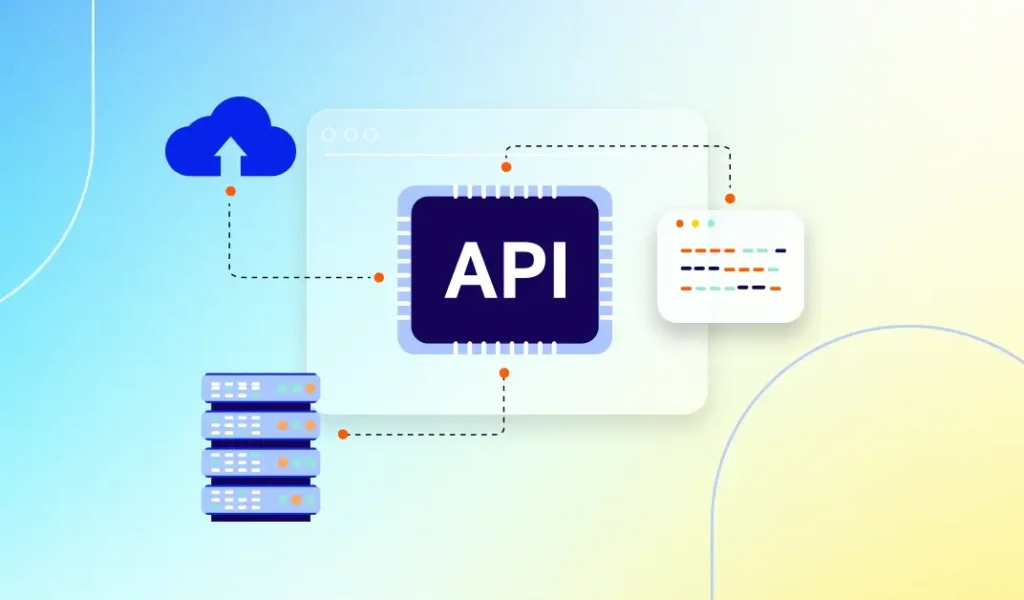
An API is a set of rules that allows one software application to request data or services from another application. It acts as a messenger that takes a request, delivers it to the right system, and returns a response.
Simply put:
An API lets different software systems talk to each other.
A Simple Real-World Example
Imagine a restaurant:
- You (the customer) choose a dish
- The waiter (API) takes your order
- The kitchen (server/system) prepares the food
- The waiter brings the food back to you
You don’t need to know how the kitchen works — the API (waiter) handles communication.
How Does an API Work?
APIs work using a request and response process.
Step-by-Step Process
- A client (app or website) sends a request to the API
- The API processes the request
- The server performs the required action
- The API returns a response (data or confirmation)
Most modern APIs use HTTP and send data in JSON format.
Common Types of APIs
1. Web APIs
Used to connect web and mobile applications (e.g., weather APIs, payment APIs).
2. REST APIs
The most popular type of API. They use standard HTTP methods:
- GET (retrieve data)
- POST (send data)
- PUT (update data)
- DELETE (remove data)
3. SOAP APIs
Older and more structured APIs, often used in enterprise systems.
4. Internal APIs
Used within an organization for internal systems.
5. Public APIs
Available for developers to build third-party applications.
Why Are APIs Important?
APIs provide many benefits:
- Enable integration between different systems
- Speed up software development
- Improve scalability and flexibility
- Allow reuse of existing services
- Support mobile and cloud applications
Many popular services — such as Google Maps, social media logins, and payment gateways — rely heavily on APIs.
API Security Basics
Because APIs expose data and functionality, security is crucial. Common security methods include:
- API keys
- OAuth tokens
- HTTPS encryption
- Rate limiting
These ensure only authorized users and applications can access the API.
Common API Use Cases
- Logging in with Google or Facebook
- Online payments and transactions
- Weather updates in apps
- Connecting microservices
- Sharing data between platforms
Benefits and Challenges
Benefits
- Faster development
- Easy system integration
- Platform independence
Challenges
- Security risks if not properly protected
- Dependency on external services
- Version management issues
Conclusion
An API is a bridge that allows software applications to communicate and share data securely and efficiently. By handling requests and responses behind the scenes, APIs make modern digital experiences possible — from mobile apps to cloud services.
In simple terms, APIs power the connections that make today’s software ecosystem work.